
Smartphone Free Childhood
Updated: Jul 31
Delighted to be supporting the grassroots campaign that empowers parents to make informed choices about the access their children have to technology.

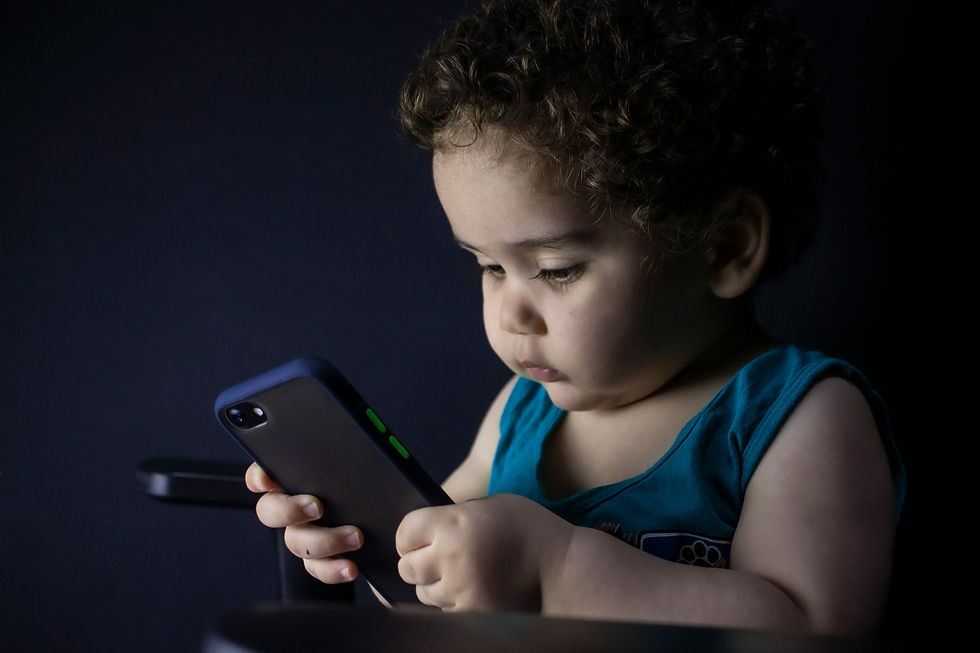
As a recent Guardian article highlights (https://www.theguardian.com/society/2026/jun/27/screen-time-damage-under-twos-development-study), there really isn't an argument for providing toddlers with access to smartphones and other devices. Despite this, recent research suggests that by 3-5 years of age, 20% of young children have their own devices.
Smartphone use soon ramps up: by 13-14 years of age, children are spending, on average, 4 hours a day on smartphones and tablets - and that does not include time on gaming consoles (https://www.gov.uk/government/news/beyond-the-headlines-what-research-shows-on-childrens-online-lives).
As adults, we know ourselves how hard it can be to resist the impulse to unlock our phones, to respond to notications, or to pass any free time scrolling. There is a general feeling amongst many that technology is impacting all our behaviour - for example, making it harder to focus (https://www.kcl.ac.uk/news/are-attention-spans-really-collapsing-data-shows-uk-public-are-worried-but-also-see-benefits-from-technology). If the average person unlocks their phone 80 or so times a day, that is a massive opportunity cost to other activities.
For the developing brain the impact on brain architecture is, one assumes, going to be more significant. There are two peak periods for neuroplasticity - in early childhood and adolescence - where the brain forms connections and later 'prunes' them, so that what is left is more efficient. This makes habits acquried during these critical development phases really difficult to kick.
It is hard to preach to children and teenagers and persuade them to form good habits when are own are pretty poor. I think back to my neighbour in the 1970s telling us never to take up smoking, as she tapped the ash off the end of her fag. Today we do the same with regard to phones - berating our kids for spending too much time on their devices, whilst we gaze into our own black mirrors. Perhaps the first step we adults need to take is to find opportunities to put our own devices away and reconnect with others.
That said, this is not a question about individual weakness. Online content and apps are designed to hold our attention, feeding us continuous hits of dopamine and other neurotransmitters. They play on our fear of missing out, on our need for social connection and validation. Billions of pounds are made annually by the tech companies who steal our attention. The problem is so structural that it can feel impossible to ever get our own phone use back under control.
However, the Smartphone Free Childhood campaign aims to help parents and carers identify ways to reduce phone use, tips for having tricky discussions about phone use, and strategies to help families take back control of their time. The group's next free talk will be held in September 2026 (date to be confirmed), at Fairstead House School in Newmarket. As well as presentations, there will be time for questions from the floor and an opportunity to meet and swap ideas and experiences with other parents and carers. As always there will be a good selection of food and drink to fuel the discussions.

Comments